
How Website Speed Impacts Conversions: A Practical SEO Case Study
Discover how website speed can impact conversions, user experience, SEO performance, and business growth through a practical website performance case study.
Industry
Technology & Social Media
Service
Permanent & Temporary Staffing
Challenge
How Website Speed Impacts Conversions: A Practical SEO Case Study
A Slow Website Does More Than Frustrate Visitors. It Can Cost You Customers
A website can have a great design, strong content, and a compelling offer.
But if visitors have to wait for the page to load, they may never see any!
Website speed is not just a technical or SEO issue. That directly impacts user experience, engagement, and conversions.
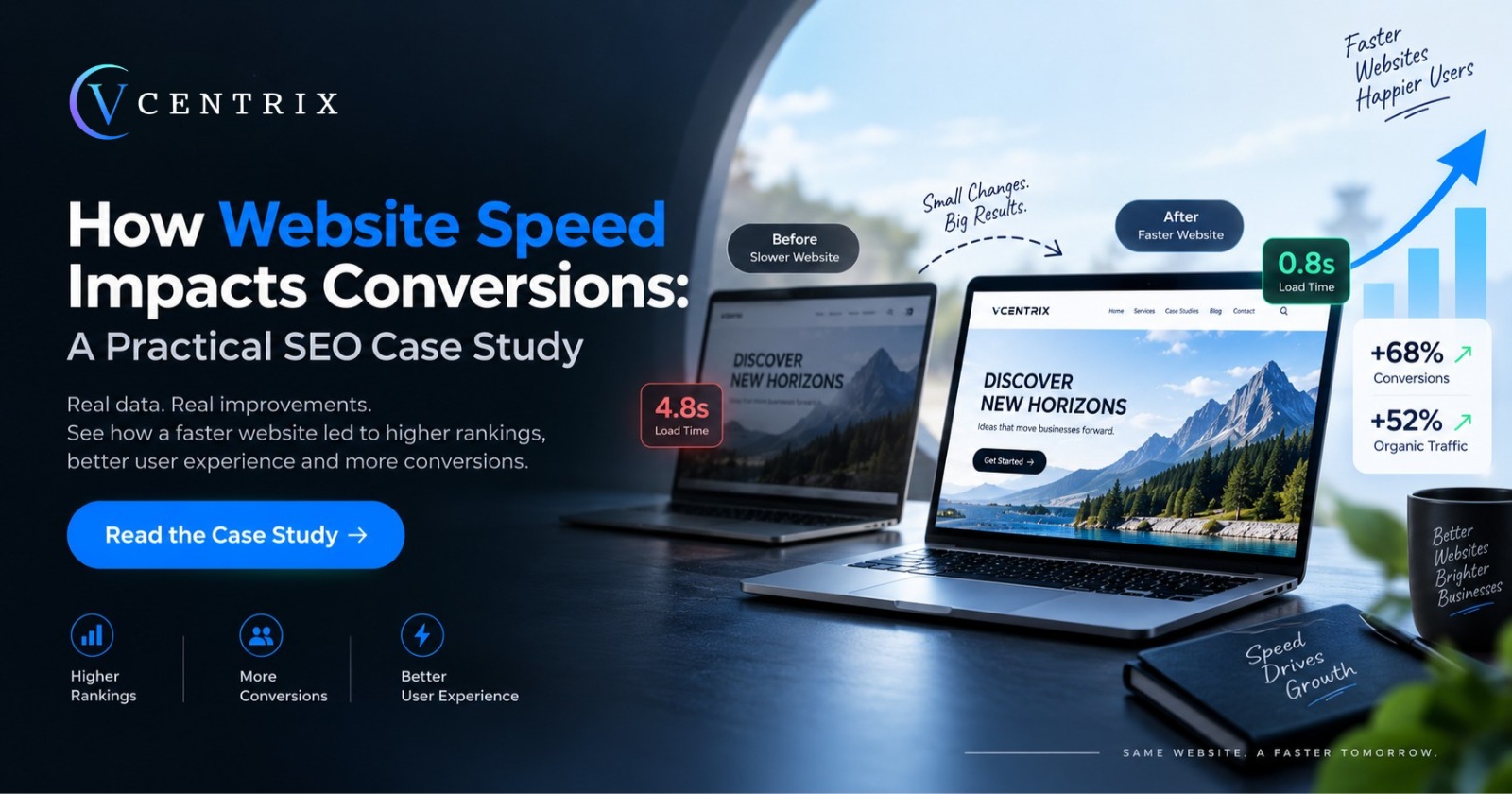
This case study discusses how improved website performance can contribute to a better customer journey and lead to improved conversion performance. In this case study, we demonstrate with numbers how website speed impacts conversion performance. They are not displayed as the results of a particular client.
Solution
The company featured a well-designed website that was attracting visitors through organic search, paid campaigns, and other digital channels.
However, the website was not converting traffic as well as hoped for.
The primary concerns were:
Page loading slowly
High drop off visitor
Bad mobile experience
Low engagement on key landing pages
People who leave before filling out forms or buying
Conversion growth lagging behind traffic growth
The business was spending money on traffic generation, but the website experience was creating friction when visitors arrived.
The problem was clear.
How do you turn more of the traffic you have into meaningful conversions?
The emphasis was on enhancing the website experience instead of simply increasing advertising expenditure right away.
The strategy concentrated on:
Measure → Identify → Optimize → Test → Improve
The goal was to identify where speed was impacting the customer journey and to remove unnecessary friction.
The optimization was performed on:
Increasing page loading speed
Image optimization and compression
Cutting down on unnecessary scripts
Boosting mobile performance
Page structure optimization
Review of third-party elements
Landing Pages Optimization
Post-implementation performance monitoring
This wasn’t simply about making the “website faster.”
It was to speed up and simplify the path to conversion.
Process
1. Evaluate Your Website’s Performance
The first step was to set a baseline of performance.
The important areas were:
Page load speed
Performance on mobile
Desktop performance tests
Core Web Vitals
Bounce and interaction behavior
Landing page performance
Conversion rates
This allowed them to see if performance issues were affecting the pages most critical to the business.
2. Identify the Critical Performance Issues
Not all website problems are created equal. The audit pointed out typical performance bottlenecks like large image files, duplicated JavaScript, too many third-party scripts, and elements that slow down the first-page experience. The idea was to fix the things that mattered most to important pages.
3. Optimize the Key Elements of Your Site
Then we had to reduce unnecessary page weight and speed up the time to get visitors to relevant content.
These were:
Pictures: Use better file formats, compress large images, remove or reduce duplicate scripts and resources.
Third-party tools: Check for any third party tools which may be slowing down the page load.
Mobile Experience: Ensure that pages are optimized for visitors viewing the site on mobile
Devices Page layout: Put the most important information for your visitors at the top of the page.
4. Validate the User Journey
Improvements to speed matter most when they improve what people actually do.
The key journeys were analyzed from:
Landing → Browse → Engage → Action → Conversion.
This let us see if visitors were reaching key areas, engaging with calls to action, and submitting forms or making purchases.
5. Track and Improve
Website performance isn’t a one-time job.
Page weight can slowly increase as new content, plugins, tracking tools, images, and website features are added.
Performance therefore must be monitored on a regular basis.
The goal is simple:
Keep the website fast as it scales.
Metric After Optimization
Post Optimization
Monthly Visitors: 50,000 50,000
Average Loading Speed
2.1 sec 4.8 sec
Conversion Rate: 2.8% 2.0%
Monthly Conversions: 1,000 1,400
Visitor-to-Conversion Optimization — +40%
The key thing is that traffic stayed the same.
The growth came from making the experience better for the people who were already coming to the site.
What's New?
The biggest lesson was that more traffic isn't always the first answer to low conversions.
A slow website could mean companies are sending more people into a bad experience.
Here’s one way to think about it:
More Traffic → More Visitors → More Friction → Missed Opportunities
But when website performance improves, you:
More Traffic = Better Experience = More Engagement = More Conversions
That’s why website speed should be part of the conversion strategy and not just a technical SEO task.
The Importance of Website Speed for SEO & Conversion:
A website’s performance can impact many aspects of the digital customer journey. Enhanced user experience. Pages that load faster and more smoothly are more likely to keep visitors on the site and browsing.
Reduced friction
A faster website lets users find information, explore products or services, and take action.
Improved mobile experience
Mobile performance is especially important, as a large amount of web traffic comes from mobile devices.
Better SEO Basics
Page experience and performance signals are only part of search engines’ wider assessment of websites.
More Value from Your Existing Traffic
If you are already investing in SEO, advertising, or content marketing, then optimizing conversion efficiency allows you to get more out of that traffic.
The Greater Business Impact
Take, for instance, a business that receives 50,000 visitors per month.
With a 2% conversion rate:
50,000 2% = 1,000 conversions
If website experience improvement leads to a 2.8% conversion rate:
50,000 2.8% = 1,400 people converting
That’s 400 more conversions each month, with no extra traffic.
This is why the performance of your website deserves attention.
Sometimes the goal is not to get more people to your website.
It’s helping more of the people who are already there to finish the journey.
Results
A fast website is not only about a better technical score.
It’s about providing a better experience that drives business results.
Businesses should:
Regularly monitor website speed
Focus on mobile performance
Optimize big images and media
Remove unnecessary scripts
Optimize important landing pages
Monitor conversion behavior
Technical improvements should align with business KPIs
Continue testing and optimizing
One faster website can shorten the path between interest and action.
And when every visitor counts, that difference can make a measurable contribution to growth.
Google speed isn’t just an SEO metric. It’s an opportunity to convert.
You can spend a lot of money on content, SEO, advertising, and social media sending people to your website.
But if the experience is slow, you can lose some of that investment before visitors ever reach your call to action.
The smarter option is to look at the entire journey:
Get Found → Load Quickly → Engage Visitors → Build Trust → Drive Action
Because getting more traffic is only half of the equation for growth.
The real opportunity is to convert more of the traffic you already have.