
How to Build a Marketing Strategy From Scratch
Discover how a structured marketing strategy can transform scattered marketing efforts into a focused growth system through research, positioning, channel selection, execution, measurement, and optimisation.
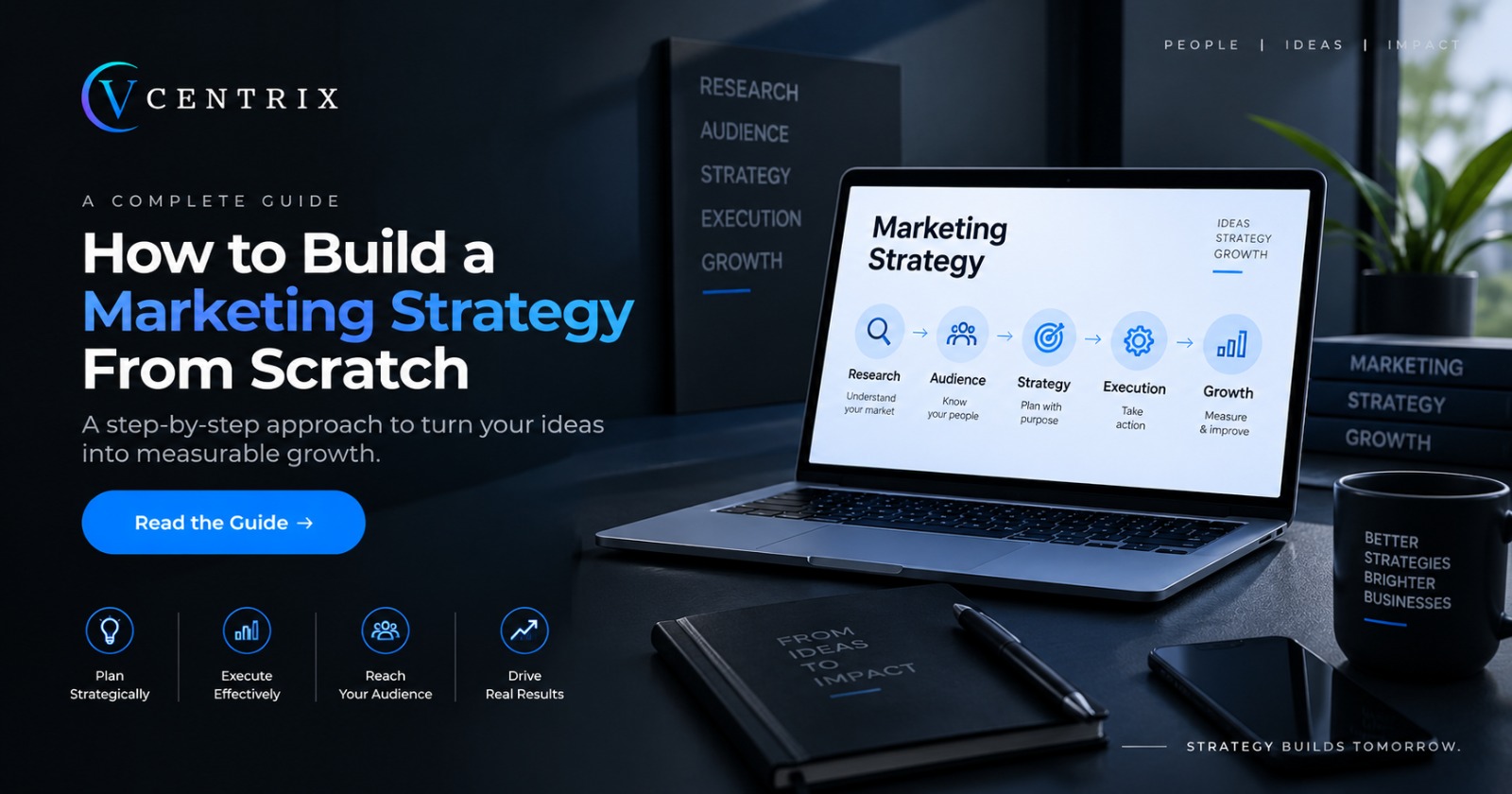
Industry
Technology & Social Media
Service
Marketing Strategy
Challenge
How to Build a Marketing Strategy From Scratch
No Strategy
No Direction
No Growth
Here’s How We Changed That.
Even a business with a great product, a strong team, and a solid budget can end up with three things pulling in different directions if there’s no clear marketing strategy.
This case study demonstrates how a company can transition from individual marketing actions to a unified, measurable growth plan.
Note: This is a hypothetical case study created to demonstrate the process of marketing strategy. Performance figures are not a guarantee of actual client results.
Challenges
The business was spending on a number of marketing activities but had no clear strategy.
Its main challenges were:
No clearly defined target audience
Inconsistent messaging
Marketing efforts spread across multiple channels
Limited understanding of which channels were performing
No structured content plan
Difficulty connecting marketing activity with business goals
The problem wasn't a lack of marketing.
It was a lack of direction.
Solution
The strategy was reconstructed around one simple rule:
Understand → Place → Reach → Convert → Measure
The strategy didn’t start with social media posts or ads. It started with the business objective.
1. Set the Goal
The first was to determine what marketing was supposed to do: brand awareness, qualified leads, sales, or customer retention.
2. Know Your Audience
The target market was defined by customer needs, pain points, behaviors, and buying intent.
3. Positioning
The brand’s messaging was honed around one simple question:
Why choose us as a customer?
4. Choose the Correct Channels
Instead of trying to be everywhere, channels were selected based on where the target audience was most likely to find, evaluate, and interact with the brand.
5. Develop a Content Strategy
The content was structured around the various stages of the customer journey:
Awareness -> Consideration -> Conversion
6. Measure & Optimize
Marketing spend and effort needed to be adjusted, and performance indicators were developed to see what was working.
Process
The marketing strategy process was done in five stages:
01 Enquete
Evaluate the market, competitors, customers, current performance, and opportunities.
02 Strategy
Identify the audience, positioning, objectives, messaging, channels, and KPIs.
03 Execution
Launch content, campaigns, social media, SEO, paid advertising, and other selected initiatives.
04 Measurement
Track metrics like:
Website traffic
Engagements Leads
Conversion ratio
Cost of acquiring customers
Marketing ROI
05 - Optimization
Use performance data to fine-tune campaigns, messaging, targeting, content, and budget allocation.
Results
When the business took a structured approach, it had a more defined marketing system rather than disjointed activities.
The transformation is:
Previously:
Scattered campaigns → Inconsistent messages → Limited measurement
After:
Clear audience → Consistent positioning → Focused channels → Measurable KPIs → Continuous optimization
The biggest improvement wasn’t just doing more marketing.
It was making all marketing activities work toward the same business objective.
A marketing strategy does not begin with:
“What shall we erect?”
It starts with:
“What do we want to accomplish, who do we want to reach, and why should they choose us?”
When the answers to those are clear, content, advertising, SEO, social media, and lead generation can function as parts of one connected system.
Don't sell everywhere. Target market.
A strong marketing strategy converts disparate activities into a focused growth engine, allowing businesses to make better decisions, spend more wisely, and build long-term success.