
How AI Automation Reduced Repetitive Marketing Work
See how a marketing team used AI automation to cut repetitive tasks like reporting, content repurposing and lead follow-up, and freed time for strategy and creativity.
Industry
Technology & Social Media
Service
AI-Powered Digital Advertising
Challenge
A growing marketing team was running campaigns across social media, email, and paid ads, but most of the week went to repetitive tasks. Strategy and creative work kept getting pushed aside by manual work that had to be repeated every day.
Manual reporting: Team members copied numbers from several platforms into spreadsheets every week.
Content repurposing by hand: Each blog or video was rewritten separately for every channel.
Slow lead follow-up: Leads were sorted and answered manually, so replies were late and inconsistent.
Scattered workflows: Briefs, approvals, and publishing lived in different tools, with constant status check-ins.
Solution
Identify repetitive, rule-based tasks and automate them with AI and workflow tools, while keeping people responsible for strategy, creative direction, and final approval. The rule: automate the routine, review the output, and protect human judgment.
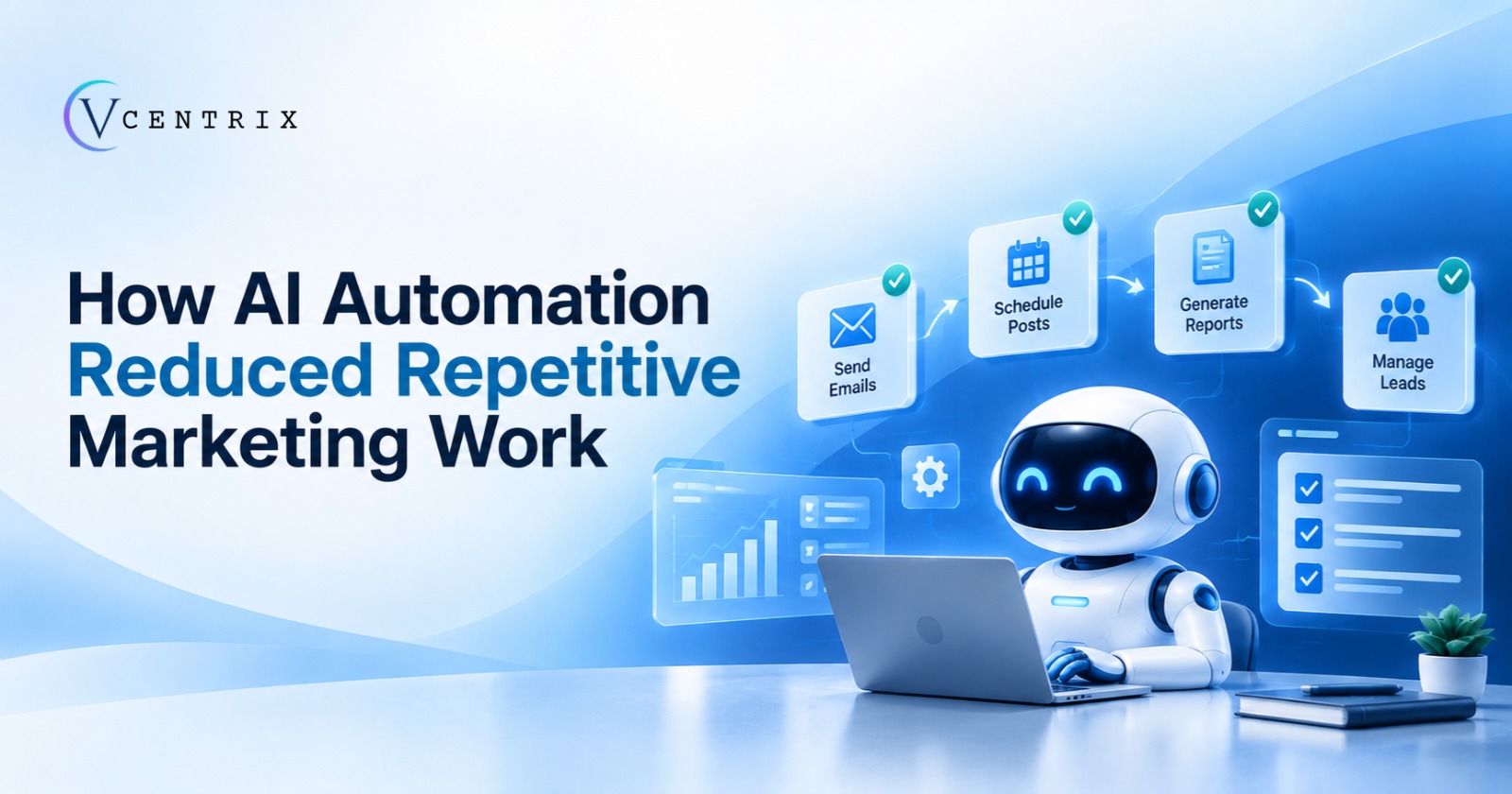
Reporting: Automated data collection and weekly summaries
Content: AI-assisted repurposing and first drafts, with human editing
Leads: Automated tagging, routing, and first-response emails
Operations: Connected workflows for briefs, approvals, and scheduling
Process
Audit the workload: Track how the team spends its week and list every task that is repeated, rule-based, or low-judgment.
Prioritize by impact: Rank tasks by time spent and risk, and start with high-effort, low-risk work such as reporting.
Build and connect the workflows: Set up automations between ad platforms, email, CRM, and project tools, and create AI prompts and templates for repurposing and drafting.
Add human checkpoints: Require review before anything customer-facing is published or sent, and keep brand voice guidelines in every prompt.
Measure and refine: Track time saved, error rates, and output quality weekly, then adjust or retire any workflow that does not perform.
Results
The team's focus shifted from "how do we get this week's tasks done?" to "what should we create and test next?" Reports arrived on time without manual effort, content reached more channels with more consistent messaging, leads received faster responses, and the freed time went to strategy, creative testing, and campaign improvement.
Before publishing as real work, add only verified figures:
Hours saved per week or month on reporting and content tasks
Change in lead response time or lead-to-customer conversion rate
Increase in content output or campaigns launched
Reduction in errors or rework
A genuine client quote, if one exists